

Trauma Counselling in Vancouver, BC
Attachment-focused trauma counselling for PTSD, complex trauma, childhood wounds, and relational trauma. In-person in Kitsilano and online across BC.
Trauma Therapy for PTSD & Complex Trauma
Trauma is not always what we think it is. It is not only the big, dramatic events. It can be years of feeling unseen, unsupported, or unsafe in relationships that were supposed to be safe. It can be the slow accumulation of experiences that left you with a persistent sense that something is wrong with you, when really, something hard happened to you.
At New Tides, we offer trauma counselling and trauma therapy in Vancouver for individuals ready to work through what they are carrying. Our counsellors specialize in supporting clients processing attachment trauma, PTSD, complex PTSD, childhood & developmental trauma, and relational wounds, drawing on EMDR, somatic therapy,parts work, and attachment-focused approaches.
Trauma can also be complicated to understand or name. You might know that something from your past is still affecting you without knowing whether to call it trauma, complex trauma, PTSD, or something else entirely. While it might be important, that might also not be the most important part. We can be curious about what's happening together.
Keep reading to learn more about trauma therapy.
Browse our trauma counsellors further down the page.
Know you want support already? Connect with us below!
Know you want support but not sure where to start?
Our counsellors are people first. We truly believe that no one is broken, even when we feel stuck, overwhelmed, or like something is wrong with us. You’re just human, and being human can be complicated (and sometimes frustrating) to navigate.
Come take your shoes off, curl up with some tea, and let’s make a plan.
Our Find a Counsellor form can connect you with a counsellor who feels like the right fit for you:
What Trauma Can Look Like
Trauma shows up differently for everyone. Sometimes it looks like what you might expect: flashbacks, nightmares, hypervigilance. But often it is quieter than that.
It might look like anxiety that seems to come from nowhere. A persistent feeling of being on edge, dissociation, or a sense of numbness and disconnection that is hard to shake. Difficulty trusting people, even people you love. Patterns in relationships that repeat no matter how hard you try to change them. A harsh inner critic that will not let up. Physical symptoms like chronic tension, fatigue, or pain that does not have a clear explanation (even if you’ve looked hard for one). These sometimes less obvious echoes of trauma often show up in those with childhood trauma, complex PTSD, relational trauma, or experiences that didn't necessarily look like a single dramatic event.
For some people, trauma shows up less as a memory and more as a way of moving through the world: always anticipating what might go wrong, finding it difficult to relax when things are going well, feeling responsible for everyone else's emotions, or struggling to feel safe even when you know intellectually that you are.
These are not character flaws or signs that something is permanently broken. They are ways the nervous system learned to protect you. And they can also change with time, care and attention.
How Trauma Therapy Works at New Tides
There is no single right way to work through trauma. Trauma-based therapy can look many different ways. Our counsellors draw on a range of approaches and collaborate with you to find what feels right, and while we love curiosity, you don't need to arrive knowing which one you want to start with or focus on.
Here are the main approaches our trauma counsellors use:
-
EMDR works with traumatic memories that feel stuck, helping the brain process them in a way that reduces their emotional weight over time. It is well-researched and widely used for PTSD, complex trauma, and attachment wounds.
-
Somatic approaches pay attention to what is happening in the body during therapy, not just the mind. Trauma can continue to shape the nervous system long after an experience has ended, and body-based work can reach places that talking alone sometimes cannot.
-
Attachment-focused approaches work with the relational roots of trauma: the ways early experiences of feeling unsafe or unlovable shape how we move through the world now. This includes AEDP, EFT, and other relationally-grounded approaches.
-
Parts-based approaches help you get to know the different parts of yourself, including protective parts that developed in response to difficult experiences. Rather than fighting those parts, trauma therapy that uses parts work as a foundation is often about understanding what these parts and trauma responses have been trying to do for you.
-
Structured approaches that build skills for managing trauma responses, emotional dysregulation, and distress. They can be useful on their own or alongside deeper processing work.
Types of Trauma We Work With
-
PTSD can develop after a single traumatic event such as an assault, accident, traumatic loss, witnessing violence, or another experience that felt overwhelming or life-threatening. Trauma therapy can help when memories, emotions, body responses, or patterns of avoidance continue to affect your life.
-
Complex, ongoing, or developmental trauma that has shaped your sense of self and your relationships, either through early experiences or prolonged periods of stress, trauma and relational stress in adulthood. Our trauma counsellors use approaches that can support both stabilization and deeper trauma processing.
-
Emotional, physical, or sexual abuse, neglect, and impactful childhood experiences that continue to show up in adult life.
Childhood trauma can continue to affect relationships, self-worth, emotional regulation and the way your body responds to stress long after childhood has ended.
-
Relational and attachment trauma can develop when fear, rejection, instability, emotional unavailability, or a lack of safety frequently show up in important relationships with caregivers, family members, or partners. Trauma counselling can help you understand how these experiences may still impact relationships, boundaries, trust, and your sense of self.
Trauma can surface as a result of adult relationships too. Relationship trauma may develop through emotionally harmful, controlling, unpredictable, or abusive relationships, difficult breakups, or repeated experiences of betrayal or loss of safety. Therapy can help you understand what happened, work with the effects it left behind, and develop a greater sense of choice in relationships now. -
Dissociation often shows up as a response to overwhelming or traumatic experiences. While dissociation has various forms, it can involve feeling disconnected from yourself, your body, your emotions, your surroundings, or parts of your memory. Trauma counselling can help you recognize and support your nervous system’s dissociative responses to develop greater safety, connection, and choice.
-
Emotional abuse can leave lasting effects even when there are no visible signs of what happened. Experiences in emotional intense or harmful relationships, or relationships in which you doubt your own perceptions can affect self-worth, boundaries, relationships, and emotional safety. Counselling can help you make sense of these experiences and their effects.
-
We offer sensitive, non-judgmental trauma counselling for all genders who have experienced sexual assault, sexual abuse, or other forms of sexual violence. Our counsellors offer support and healing for wherever you are in your process, recent or historical. CVAP-funded counselling is also available for eligible clients.
-
Medical trauma symtoms can develop after serious illness, injury, medical procedures, hospitalization, frightening diagnoses, or experiences of feeling unsafe or powerless in medical settings. It’s common to question experiences as not “severe enough”, while still being deeply impacted. Therapy can help you work with the emotional, physical, and nervous system effects that can remain.
-
We offer support for first responders, military personnel, and veterans navigating occupational trauma and PTSD following repeated exposure to traumatic events, and the effects of high-stress work. Trauma therapy can support both specific moments and the cumulative effect of ongoing stress can affect relationships, emotional regulation, and life outside of work.
-
Workplace trauma can result from violence, harassment, accidents, repeated exposure to distressing events. Counselling can support you in processing what happened to be able to move through the lasting effects on your nervous system, confidence, relationships, and sense of safety.
-
Support for those who have experienced harm within religious communities or institutions. Religious trauma can occur when experiences within a religious community, institution, or belief system leave you feeling unsafe, controlled, ashamed, rejected, or disconnected from yourself. Counselling can provide space process your history and explore what you want your beliefs, values, relationships, and identity to look like now.
-
Culturally sensitive, anti-oppressive support for BIPOC clients navigating racialized experiences and intergenerational patterns. Intergenerational trauma can also affect how experiences of harm, displacement, oppression, or survival are carried across families and generations. Our counsellors offer culturally responsive support for clients navigating these experiences.
-
Support for birthing parents and partners processing traumatic birth or perinatal experiences. This can include difficult or unexpected births, medical complications, loss, feeling powerless or unsupported, or experiences that were very different from what you expected.
-
Grief can become particularly complicated when a death or loss was sudden, violent, unexpected, or connected to other traumatic circumstances. Traumatic grief can affect your sense of safety, your body, relationships, as well as your hope, faith and belief systems. Trauma therapy can support you in processing both the loss and the traumatic aspects of the experience.
-
Not every experience that leaves a lasting impact fits neatly into a trauma category. Chronic stress, prolonged periods of feeling unsafe or overwhelmed, and repeated difficult experiences can affect the nervous system and shape how you feel, relate, and respond. Counselling can help you understand these patterns and decide what kind of support would be useful.
There are also many instances of trauma where the cause is not as simple or defined as those above. This is normal and can still be supported by our counsellors.
Most of our clients know this, but just in case you’re wondering, you do not need a formal diagnosis or a certain level of pain or suffering to reach out for trauma counseling. If past experiences are showing up in your life now, our counsellors would love to support you.
What Therapy Can Actually Look Like
Stabilization & Safety
One of the most common fears people have about trauma therapy is that they will have to tell their whole story, relive everything, or spend every session in a dark place. That is not how it works here.
Trauma therapy at New Tides typically moves through phases. We start with stabilization: building safety in the relationship, developing resources and tools for managing difficult feelings, and making sure you feel grounded and supported before we go anywhere harder. This phase is not a waiting room for the real work. It is the real work.
Deeper Trauma Processing
When and if it feels right, we can move into deeper processing, working with specific memories or patterns at whatever pace makes sense for you. Some clients focus mostly on the present, understanding how the past is shaping things now without needing to go back through it in detail. Others find it important to revisit and make sense of what happened. Both are valid. This is where approaches such as EMDR Therapy, Attachment Focused Therapy, Parts Work and Somatic Therapy can be woven in, even if that’s not where you started.
Trauma therapy isn't about forcing yourself to remember more, feel more, or move faster. The goal is to create enough safety and capacity that you have more choice in how you respond to what you've lived through so you’re able to make decisions on where to move next.
You do not need to walk in knowing which approach is right for you. Your counsellor will work with you to figure that out as you go.
Meet our Trauma Counsellors & Therapists who Support Clients with Trauma, Complex Trauma & Attachment Trauma
Finding the right counsellor matters.
The following counsellors on our team have availability for new clients and bring different personalities, experiences and approaches to trauma therapy.
We offer free 15-minute consultations so you can connect and ask questions first.
You can browse our counsellors yourself or have our intake team help you find a potential fit.




You make sense, and you’re not alone.
Support on the way to feeling more like yourself again.
All of our counsellors offer a free 15-minute consultation. This offers you the chance to connect and ask questions about how they work, and get a sense of who you might feel comfortable with. It also helps us understand what you're looking for, so we can help you find a counsellor who feels like a great fit for where you are.
In-person trauma therapy in Vancouver at our Kitsilano clinic (1682 West 7th Ave, Suite 300, Vancouver BC) and online for clients anywhere in British Columbia & beyond.
Frequently Asked Questions About Trauma Counselling in Vancouver
-
Trauma-informed counselling means a counsellor approaches all their work with an understanding of trauma and its effects, creating a safe environment for anyone who has experienced it. Trauma counselling or therapy specifically focuses on helping you process and work through traumatic experiences. All of our counsellors are trauma-informed, and several specialize in active trauma processing.
-
No. Many people who benefit from trauma counselling have never received a formal diagnosis. If past experiences are affecting how you feel, function, or relate to others, that is enough reason to reach out.
-
No. Trauma therapy does not require you to retell your story in detail, and many effective approaches work without doing that at all. You and your counsellor will figure out together what feels right. You always set the pace.
-
CPTSD (Complex PTSD) usually comes from repeated or prolonged experiences, often in childhood, rather than a single event. It can shape things like trust, self-worth, and relationships in ways that go beyond typical PTSD symptoms.
It’s important to note that while sometimes CPTSD comes from extreme circumstances, for those who experienced trauma when they were young, experiences that can be massively impactful to a small child can often be much smaller or seem insignificant, or “not bad enough” to many clients, and often elicit shame or feelings of brokenness. -
Yes, intergenerational trauma is absolutely a real thing, and it's something several of our counsellors have quite a bit of experience working with.
-
Yes. EMDR can be done effectively online. Several of our counsellors offer EMDR sessions via video for clients across BC.
-
Many extended health plans cover sessions with a Registered Clinical Counsellor. We recommend checking your plan directly. We also offer sliding scale sessions and CVAP-funded counselling for eligible clients.
-
Yes. Several of our counsellors specifically work with childhood trauma, including experiences that happened a long time ago and still show up in how you relate to yourself and others now.
-
Yes. Trauma doesn't need to be recent for it to still be affecting you now, and it's never too late to work with it. Some of our clients are seniors who have chosen to work on their early childhood trauma and have seen quite meaningful change to what life feels and looks like now.
-
Yes, several of our counsellors work specifically with trauma connected to religious upbringing or community.
-
Yes. Dissociation can be connected to trauma, chronic stress, and several of our counsellors work with dissociation and trauma-related responses, as well as neurodivergent burnourt and overwhelm. Your counsellor can help you understand what's happening and find an approach that feels safe and appropriate for you.
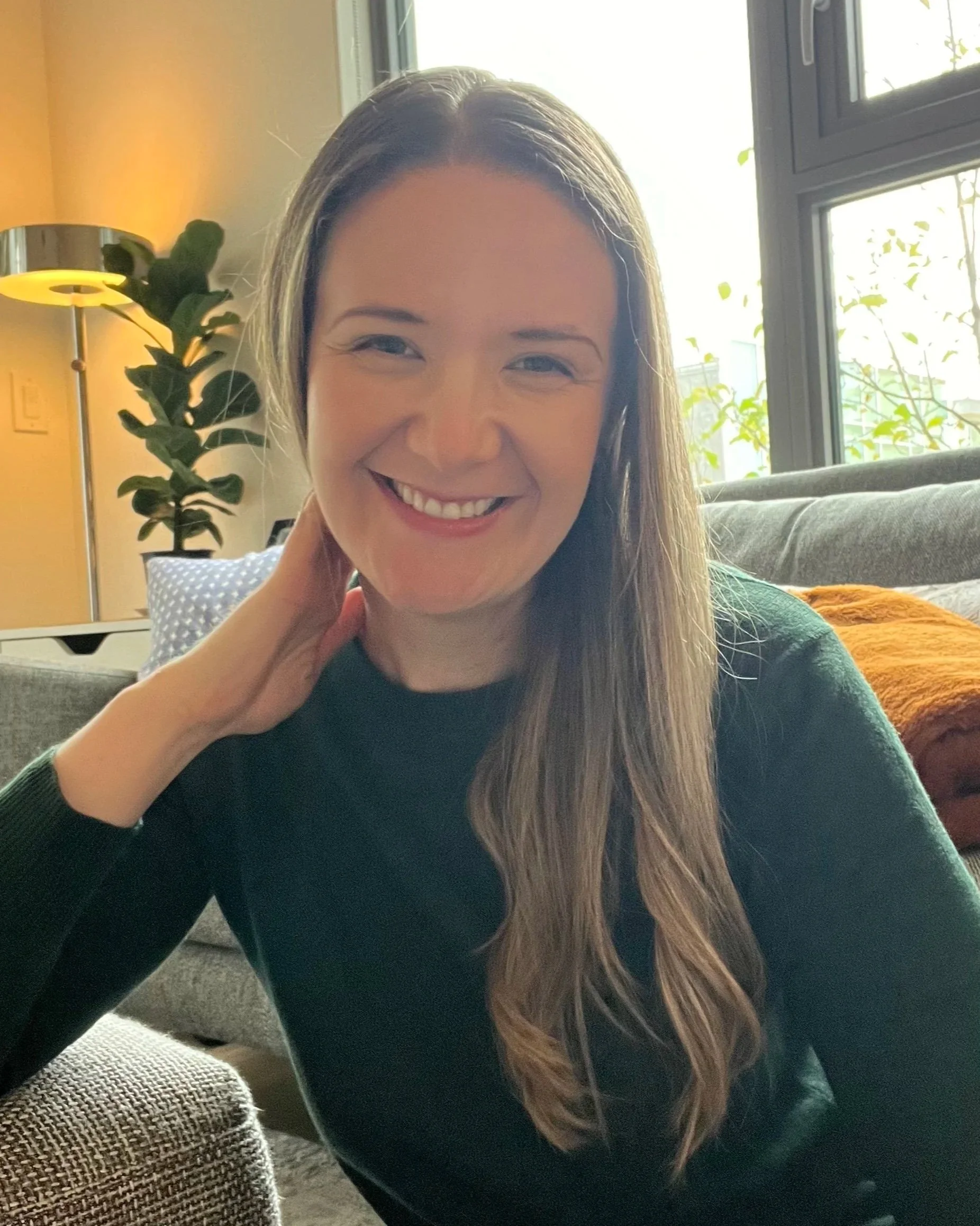
RCC (They/Her)
Collaborative · Authentic & Human · Gentle Warm & Validating · Welcomes Humour · Challenges Clients · Client-Led · Skills & Tools · Mind-Body · Insight & Patterns · Emotional Focus
LAUREN’S BIO & BOOKING →
Lauren brings a collaborative, open and human presence to counselling. They allow time for you to settle in without pressure, and become comfortable, with space for harder and deeper conversations once trust is built. Lauren brings lived experience as a longtime performer and artist, queer and neurodivergent person, and brings social justice, compassion and body acceptance into her work. The strives to create a space where each person can be fully themselves without the need to filter or hide who they are.
SPECIALTIES Neurodivergence · LGBTQIA+ · Anxiety & Panic · OCD · Depression · Burnout · Attachment · Family Relationships · Inner Child Work · Life Transitions
APPROACHES Somatic · DBT · IFS · Fat Liberation & Body Acceptance · Mindfulness · Anti-Oppressive · Narrative · Emotion Focused · Attachment-Focused · ACT · Trauma Informed · Sex Positive · Neurodivergent-Affirming